
Why I Practice Baby-Led Posing for Newborn Photography Sessions
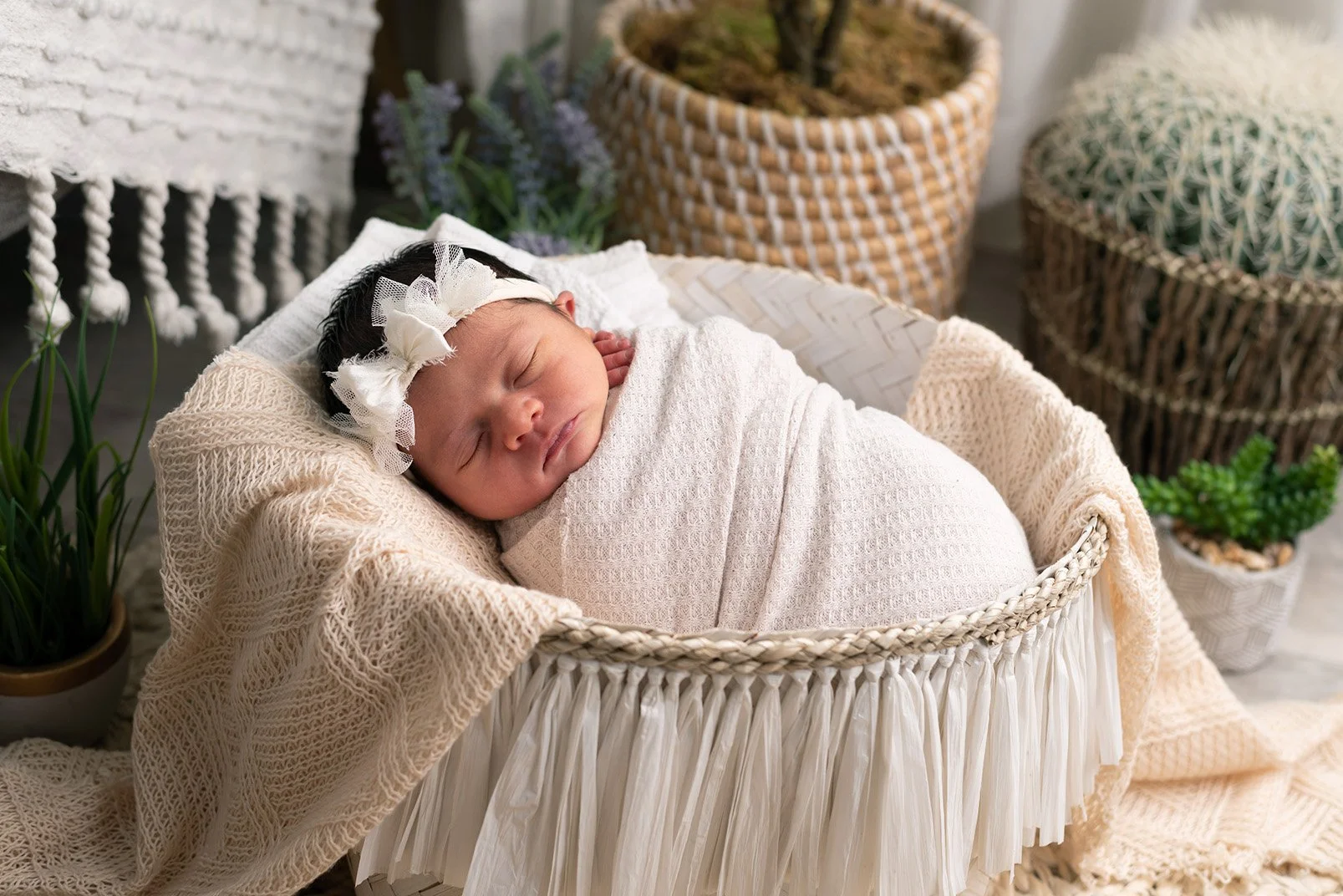
Newborn baby girl posed in a basket. Photographed by Arrowhead Photo
When you book a newborn session, you are trusting your photographer with your most valued and precious gift.
That is a responsibility I take very seriously.
After 20 years of photographing newborns, I have developed a very specific approach to posing that is called baby-led posing. The idea is simple: instead of deciding exactly how I want a baby to look and then working to get the baby into that position, I start with the baby and work with what the baby is naturally giving me.
If a position isn't comfortable, we change it.
If a baby doesn't want to settle, we don't force it.
And if a particular image simply isn't worth asking a baby to tolerate a position, we move on.
For me, beautiful newborn photography and safety aren't competing priorities. Safety is part of the process.
Newborns aren't tiny adults
One of the things that makes newborn photography so special is also one of the things that requires the most care: newborn babies are still developing.
Their muscle control is limited. They don't have the head and neck control that an older baby has, and they cannot reliably reposition themselves if their airway becomes compromised or if they become uncomfortable.
That matters when you're posing a baby.
Research into infant airway anatomy has demonstrated that head and neck position can affect the openness of an infant's upper airway. In particular, excessive neck flexion can increase airway resistance and make the airway more susceptible to collapse.
That doesn't mean that every photograph of a curled-up newborn is dangerous. It means that positioning matters, and that an adult handling a newborn should understand that seemingly small changes in head, neck and body position can have physiological consequences.
That's one reason I don't treat newborn posing like arranging a prop or styling an object.
I'm watching the baby.
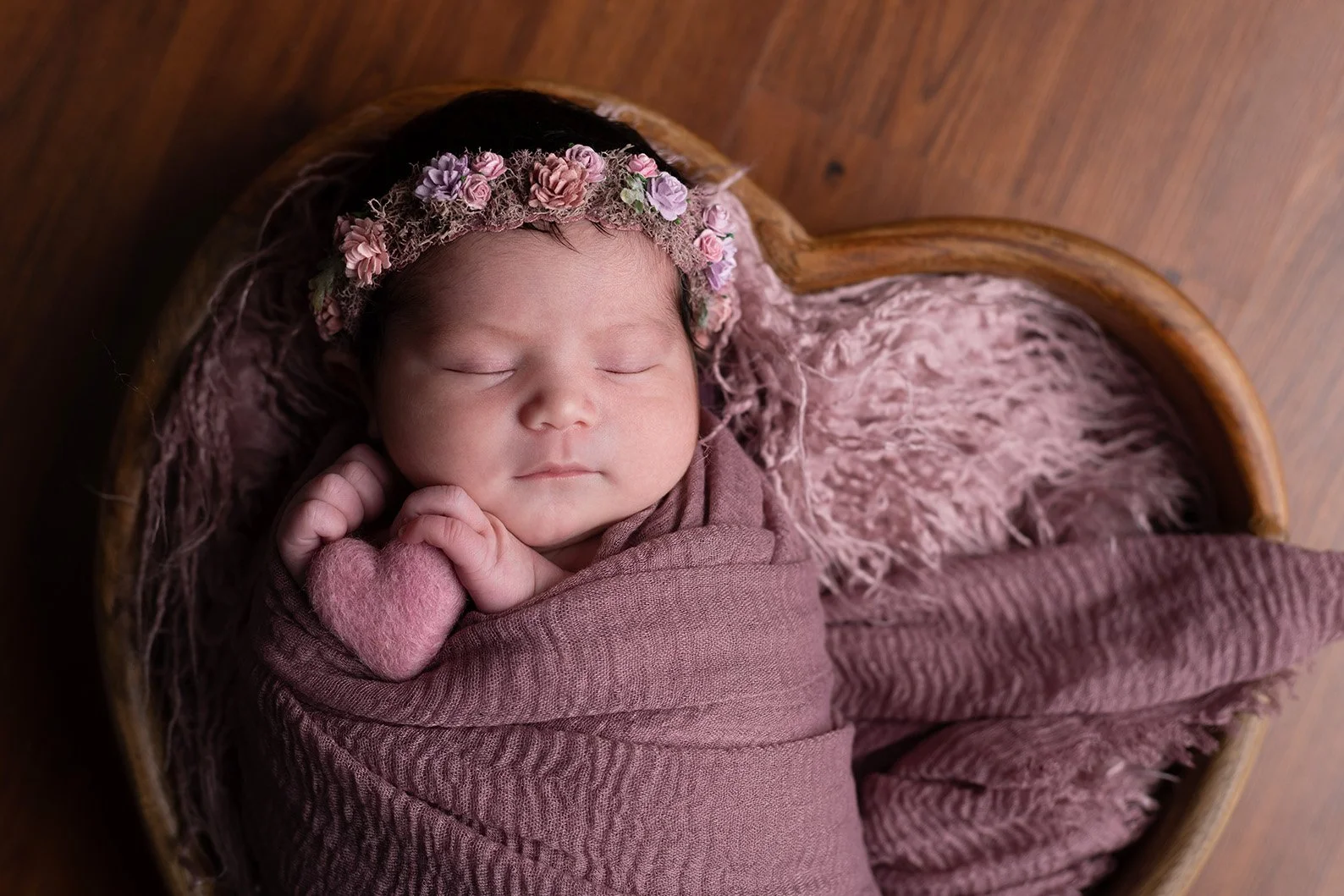
Newborn baby girl holding a heart. Photographed by Arrowhead Photo
What does "baby-led" actually mean?
Baby-led posing doesn't mean I never pose a baby.
It means I don't believe the baby should have to conform to the pose.
There is a difference.
I may have an idea for a photograph, but the baby's position, comfort and cues determine how we get there — and sometimes whether we get there at all.
During a session, I'm paying attention to things like:
facial expressions
changes in breathing
skin color
muscle tone
startle responses
fussiness or crying
signs of overstimulation
whether the baby is settling naturally into a position
whether the head and neck are appropriately supported
whether the baby's airway remains clear
A newborn doesn't have to cry before I decide that something isn't working. Knowing what to look for comes from my experience in phootgraphing hundreds of newborns.
Sometimes a baby simply becomes more active, starts rooting, changes their facial expression or repeatedly tries to move out of a position. Those are all useful information.
The baby is communicating. My job is to listen.
The science behind following the baby's cues
The concept of watching and responding to infant cues isn't unique to photography. It has been an important part of neonatal developmental care for decades.
Research on newborns, especially premature babies, has shown that babies give us signals when they are uncomfortable or overwhelmed. Things like changes in movement, breathing, facial expressions, or fussiness can tell us that a baby needs a break, a different position, or less stimulation.
Studies have also found that the way we hold and position newborns can affect how comfortable and settled they are. This is especially important with very young or premature babies, whose bodies are still developing.
That research isn't specifically about newborn photography, but it supports something I believe is important when photographing any baby: pay attention to the baby in front of you instead of expecting every baby to respond the same way.
That's exactly what baby-led posing means to me. I watch the baby's cues, adjust when they need me to, and never assume that a pose that worked for one baby will be right for another.
That's the philosophy I bring into my studio.
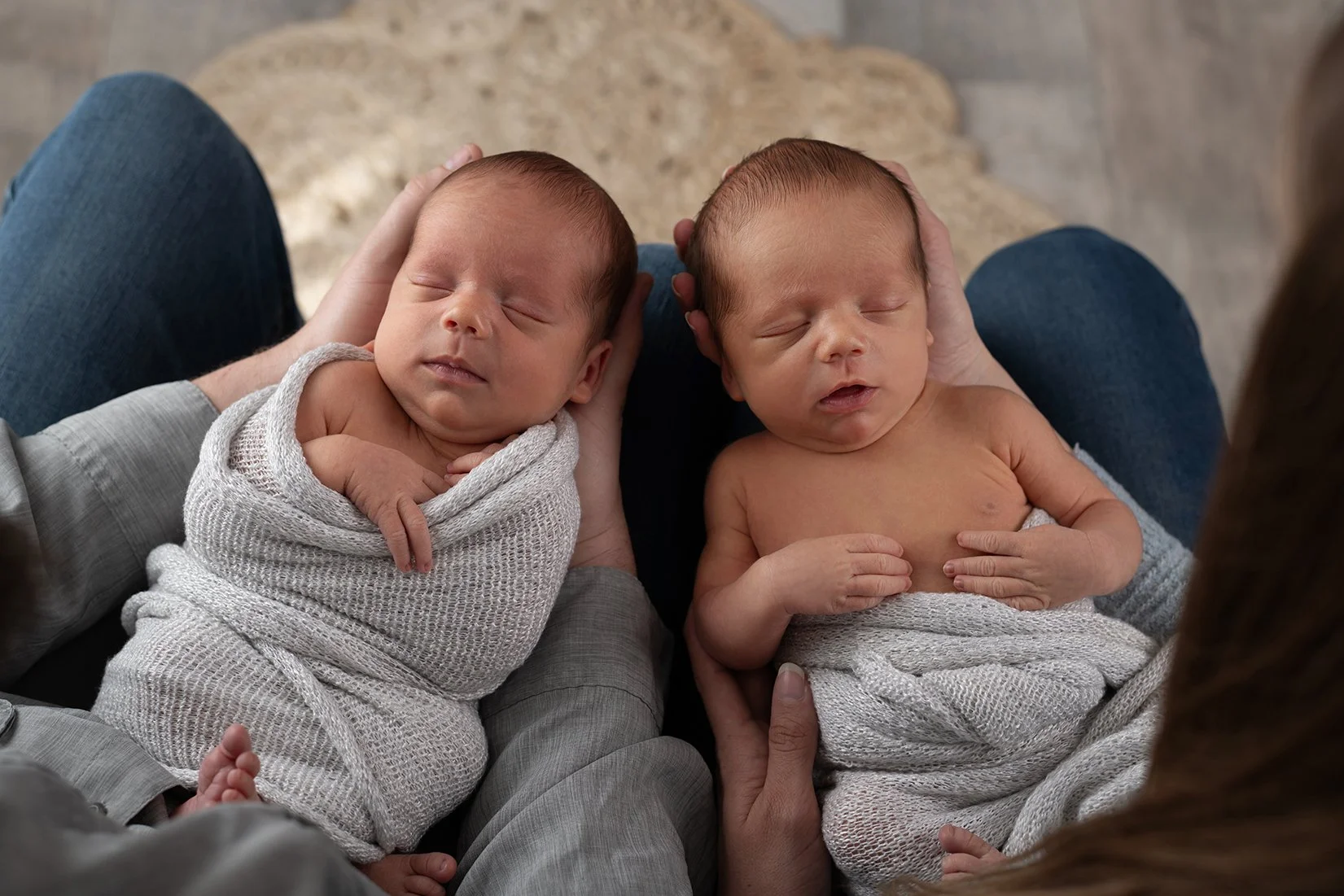
Twin newborn boys in parent’s arms. Photographed by Arrowhead Photo
Safety isn't just about the pose
When people think about newborn photography safety, they often think about the final image.
But the photograph is only one tiny part of what happened to create it.
I'm also thinking about what the baby's head is resting on, whether their airway is unobstructed, how much weight is being placed on different parts of their body, whether they are supported, how they're being transitioned between positions, and how long they're being asked to remain in any particular position.
I'm also careful about the distinction between awake, supervised posing and sleep.
The American Academy of Pediatrics recommends that infants be placed on their backs for sleep, on a firm, flat, noninclined surface, and without loose bedding or soft objects around them. The AAP also specifically distinguishes supervised tummy time while an infant is awake from sleep positioning.
That distinction matters in a photography studio.
A posed photograph isn't intended to establish a baby's sleep environment, and I never want parents to mistake a stylized photograph for a recommendation about how their baby should sleep at home.
American Academy of Pediatrics — Safe Sleep Recommendations
What about the beautiful, complicated poses?
There are many styles of newborn photography, and talented photographers use a wide variety of posing techniques.
What matters is what happened behind the photograph.
Some images that appear to show a baby independently balancing or supporting themselves are actually created with hands-on assistance, supports, composite techniques, or a combination of images. The final photograph may look effortless while the process behind it was carefully controlled.
That's why I don't judge another photographer's safety practices based solely on a finished image.
You simply can't see everything that happened outside the frame.
What I can tell you is how I approach your baby's session.
There are posed I do not attempt because I feel they look unnatural and are too risky. That is just my personal opinion.
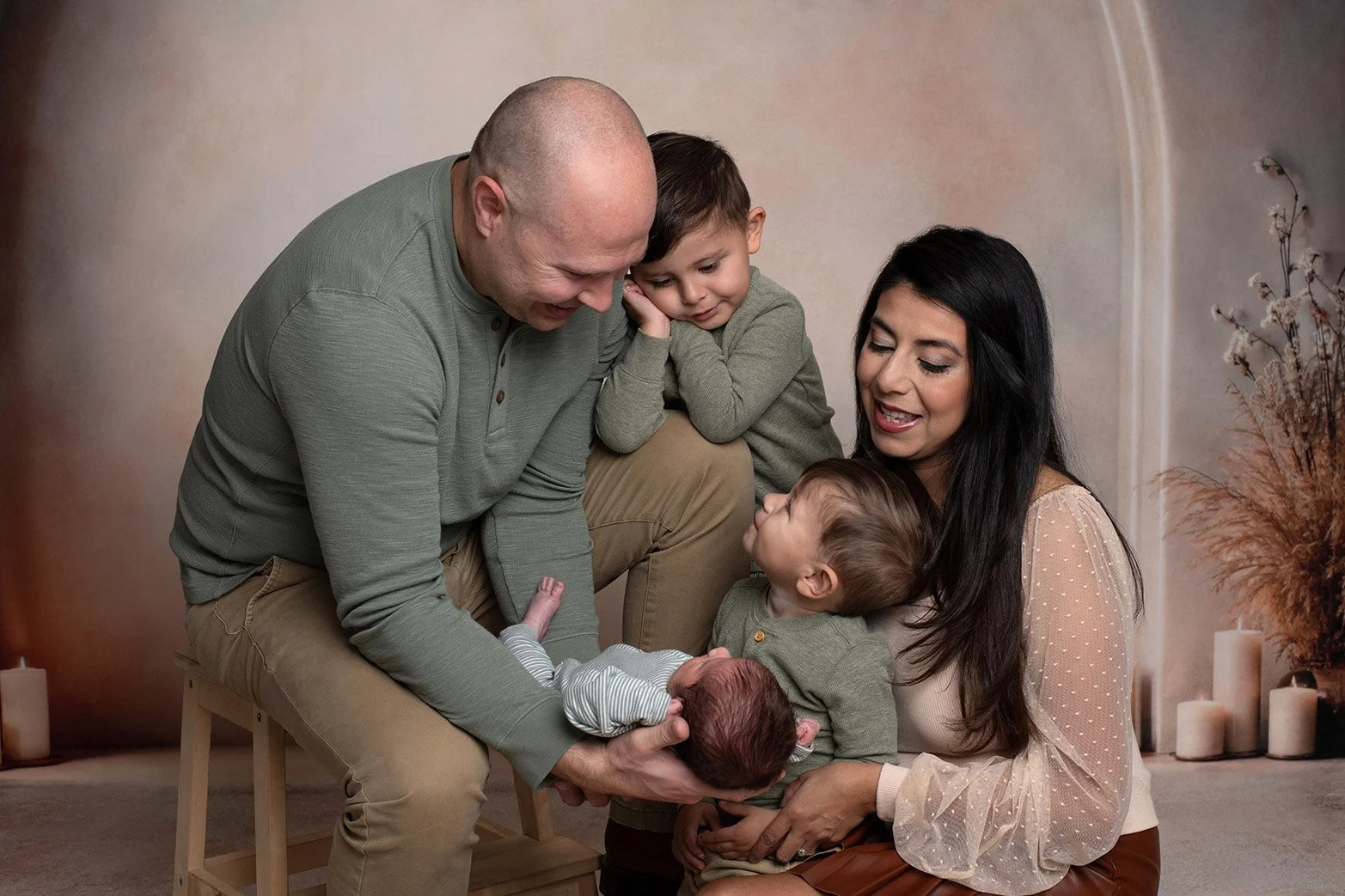
Family portrait with newborn baby boy and brothers. Photographed by Arrowhead Photo
Experience matters — but experience isn't a substitute for caution
I've photographed a lot of newborns.
That experience has taught me how differently babies can behave from one session to the next. It has also taught me that newborns don't always follow the plan.
But experience should never become an excuse for complacency.
In fact, I think the opposite is true.
The more newborns I photograph, the more respect I have for how important it is to slow down, pay attention and never assume that because something worked beautifully for the last baby, it will be right for the next one.
Every newborn is different.
Their temperament is different. Their size is different. Their flexibility is different. Their birth history may be different. Their feeding needs are different. And their tolerance for being handled can be completely different from another baby's.
So I don't have a rigid checklist of poses that every baby has to complete.
I have a collection of ideas and I keep the focus on your baby.
A note on the research
The research referenced in this article comes primarily from pediatric and neonatal medicine, including research on infant airway physiology, infant positioning, developmental care and safe sleep. There is not a large body of peer-reviewed research specifically studying "baby-led posing" in professional newborn photography. I don't claim that there is.
Instead, I use established principles about infant physiology, positioning, handling and safety to inform the way I photograph newborns.
For families, I believe that's the right approach: experience, education, careful observation and a healthy respect for what we don't know.
Learn more about my process. Read The Complete Guide to Newborn Photography in Conroe, TX
